True agroecology = land justice
We work to clear pathways for land-based livelihoods and land-based living for all people. Our work is led by farmers and land stewards facing systemic barriers to land access.
Our vision
Justice leads to thriving communities
We want to see nature reconnection particularly for communities who face barriers in accessing or farming the land. We believe reconnecting with nature is vital to a process of anti-colonisation and repair.
Land and community healing
We work for a world where society is transformed for the better through a fundamental shift in land-use towards true agroecology and land justice. We see a future where people who want to live and work on land in order to mitigate the climate crisis and create resilient communities can do this without barriers. We see a future where land ownership is not concentrated in the hands of a few, but collectivised, with the best interests of local communities and flora and fauna at the heart of land stewardship models.
How we get there

Bridging the gap
We connect farmers and landseekers who have been historically disenfranchised from accessing opportunities to steward land with the contacts, funding, and knowledge necessary to access land for sustainable livelihoods, land stewardship, and cultural and ecological wealth.
We provide training, connections to landmatching, and safer caucus spaces for Global Majority people to access the support they need in a resourced way. We work to reduce the gap between what landseekers need and where they currently are.
We are committed to the work needed to reclaim custody of the land and create true agroecology from the ground up.
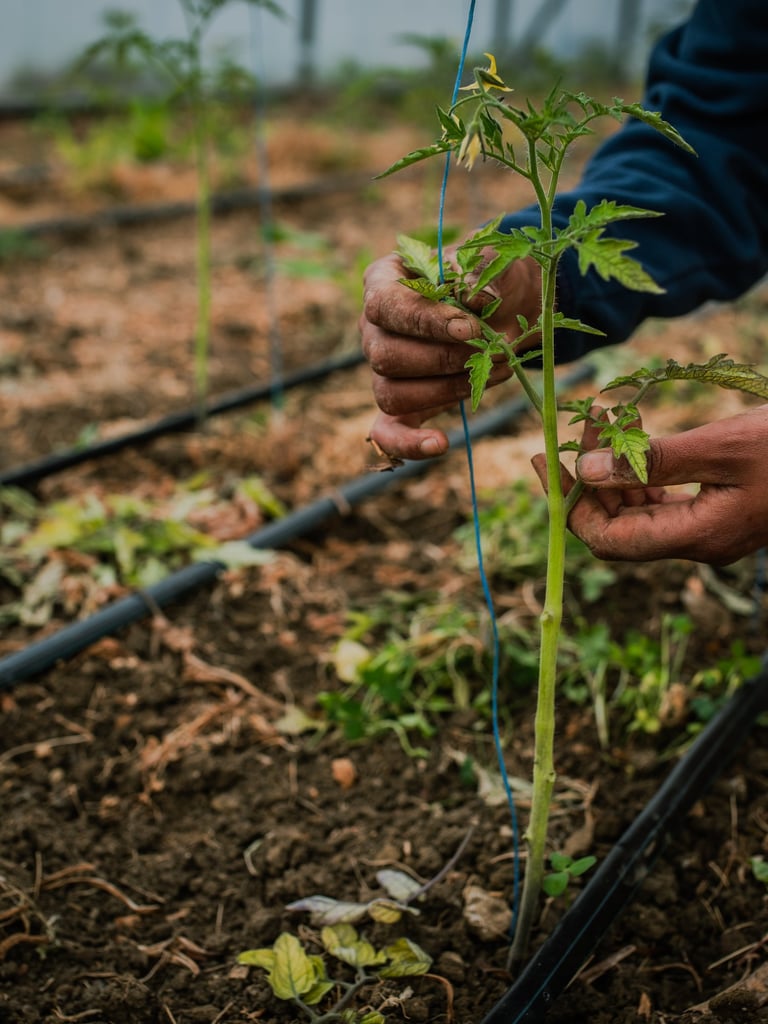
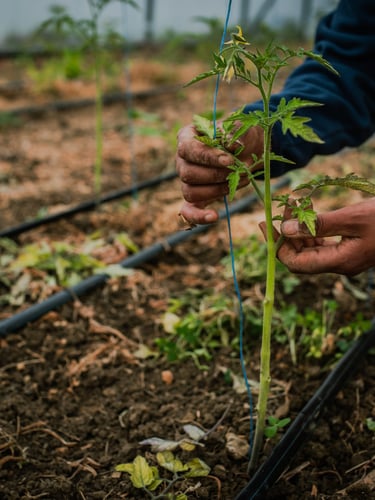
Photo credit: Woodland Farm, Photographed by Phoebe Davies for Culture Roots Collective, 2026
Meet the team
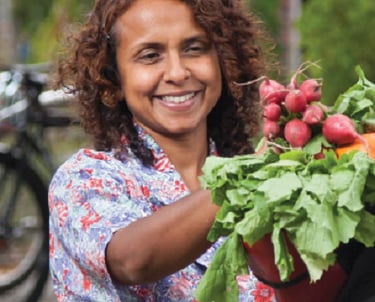
Nicola Scott
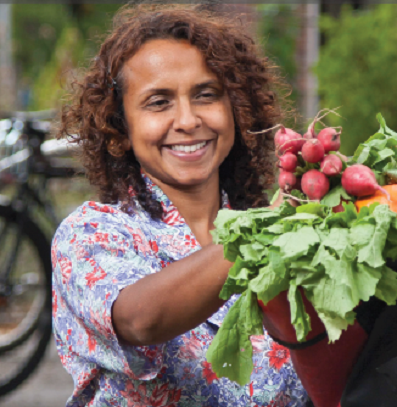
Nicola Scott has years of community food growing and ecological urban farming experience in Manchester spurred on by her PhD research in Mexico that critiqued GM crop technology transfer from the US/Europe to the Global Majority World. Tired of wondering how and why our economies fail many people and the planet, she co-authored Reclaiming Economics for Future Generations about diversifying, decolonising, and democratising the teaching and practice of economics. Returning to her passion for food systems change and aware of who often is not seen in the farming sector , with Jo coordinates Pathways to Land, as well a co-direct the Manchester-based Circular-City CIC.
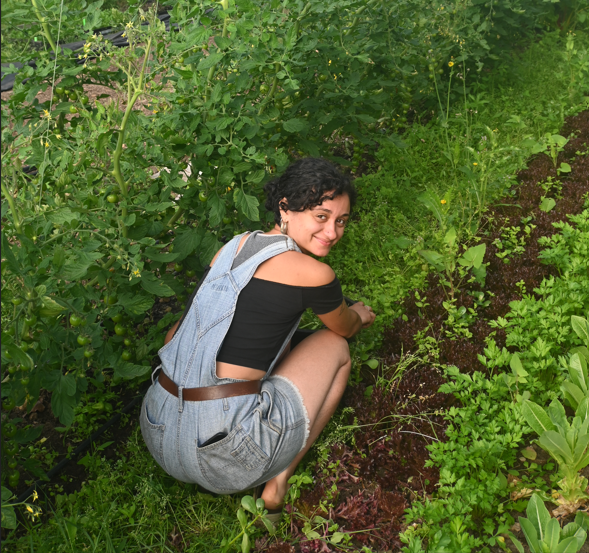
Jo Kamal
Jo Kamal (they/them) is a vegetable grower and organiser working on anti-oppression within the agroecology movement. They have spent six years as a farmer growing vegetables commercially and they have a background in decolonial research. They are particularly interested in the ways that capitalism and colonialism shape our internal worlds, and how this shaping maps onto real world relationships and power dynamics. They are coordinator of Pathways to Land alongside Nicola, and they are also currently studying herbalism.
Collaborators
Pathways to Land is part of the wider movement, and is partnered with aligned organisations working towards a more just land system.



Mythbusting
Isn't "reparative land justice" just finger-pointing?
Reparative land justice is not about blaming individuals for owning land, or punishing them for owning it. It is about understanding the injustice at the heart of the current land system, and rejecting that this model is inevitable. We are not interested in punishment but in equity. This may necessitate uncomfortable changes for some people but will ultimately benefit us all.
Don't you just hate successful people minding their own business?
No. We hate systems which allow some people to succeed and pre-destine others to fail. Inherited wealth is never earned, and even the generation who did "earn" this wealth probably did this through the exploitation of workers and enslaved people. We don't think this is fair, and we will not accept things as they are just because this is the way it has been for centuries.
How are identity markers like race, income and disability related to land use?
We think it's important to ask why things are the way they are. Private land ownership emerged largely in order to benefit the upper classes, and peasants and low income communities were driven away from the land to benefit capitalist industry. Class and capitalism are therefore integral to the maintenance of the current land use system. And there are endless documented links between class, capitalism, and things like racial oppression, patriarchy, ableism and the subjugation of the Global South. It is all interconnected.
So you want everyone to access the land, and for the land to be ruined as a result?
We do not believe humans are inherently destructive to the environment, but many of us do need to re-learn how to care for the land because our connection to nature, and our knowledge of land stewardship, has been ripped away from us. We cannot do this from behind fences. We are environmental stewards and farmers ourselves, and we are led by people with deep knowledge of caring for the land.
Our ethics
Who guides your work?
What is a transfer?
How are you funded?
Our strategy is led entirely by UK communities historically excluded from land ownership. We operate non-hierarchically to ensure collective decision-making and genuine accountability.
We assist progressive landowners in executing reparative transfers, moving acreage out of extractive private portfolios and into permanent, community-owned land trusts.
As a non-profit Community Interest Company, we rely on solidarity funding, grants, and donations that reject corporate greenwashing or extractive conditions.